Is Windows BitLocker Protection No Longer Enough? Microsoft Fixes a 0-Day Vulnerability That Could Bypass Disk Encryption
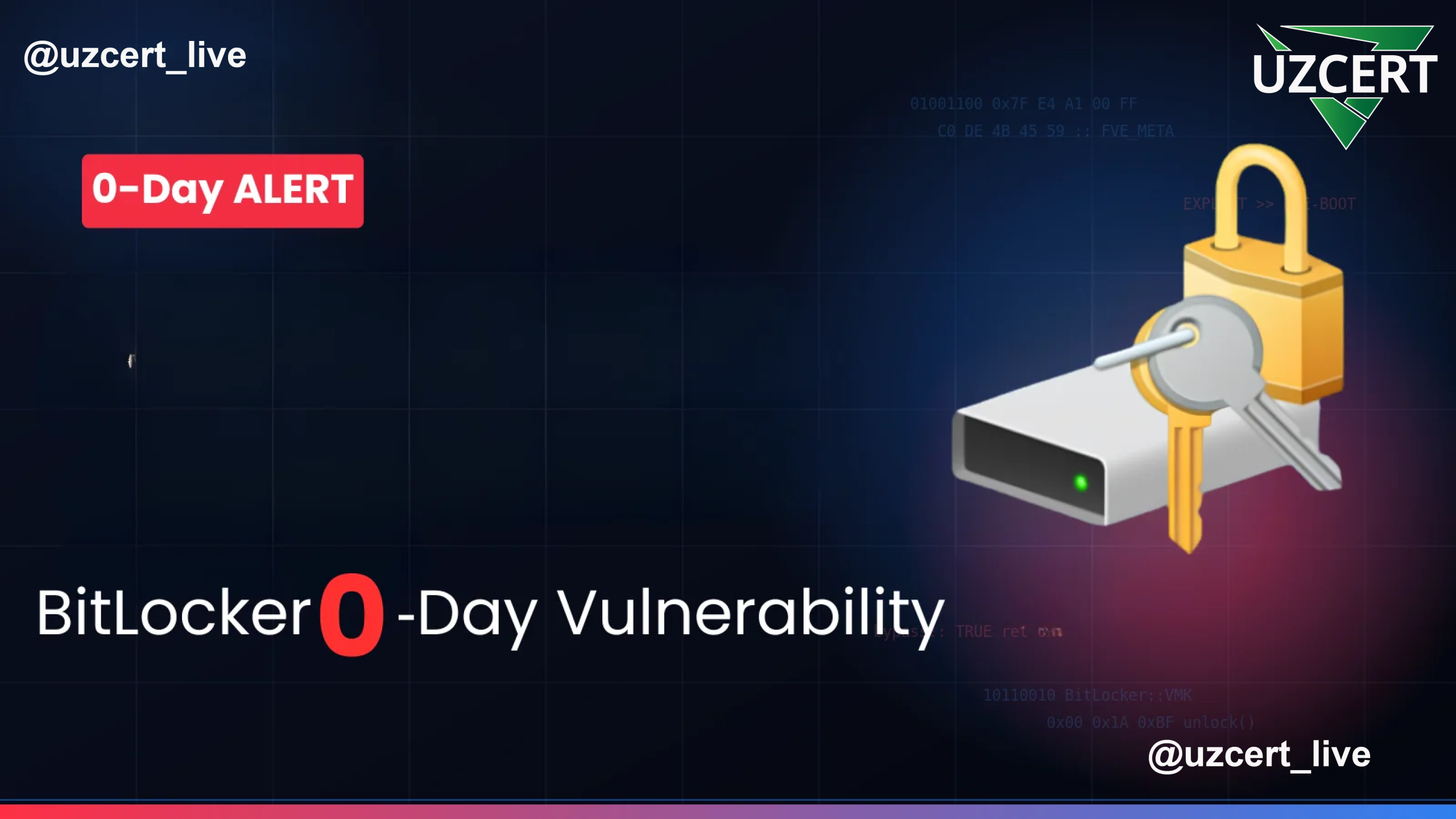
As part of its July 2026 Patch Tuesday security updates, Microsoft has fixed a new zero-day (0-day) vulnerability affecting Windows BitLocker. Tracked as CVE-2026-50661, the flaw could allow an attacker to bypass BitLocker’s disk encryption protection and gain unauthorized access to data stored on an affected device.
This vulnerability is classified as a Security Feature Bypass, meaning it does not enable remote code execution but instead allows attackers to circumvent the security mechanisms provided by BitLocker. Although there is currently no evidence that the vulnerability has been exploited in real-world attacks, its public disclosure has prompted security experts to recommend installing the available security updates as soon as possible.
What Is BitLocker and Why Is It Important?
BitLocker Drive Encryption is Microsoft’s Full Disk Encryption (FDE) technology, available in the Professional, Enterprise, and Windows Server editions of Windows.
Its primary purpose is to protect data stored on computers and servers if a device is lost, stolen, or accessed without authorization. Encryption keys are typically protected using a Trusted Platform Module (TPM), a PIN, a password, or a Recovery Key.
BitLocker is widely used by government agencies, financial institutions, healthcare organizations, and large enterprises to safeguard sensitive and confidential information.
What Risk Does the Vulnerability Pose?
According to Microsoft, CVE-2026-50661 stems from a weakness in BitLocker’s security mechanism.
If an attacker gains physical access to a device, they may, under certain conditions:
- bypass BitLocker protection;
- unlock the system drive;
- access encrypted data without knowing the BitLocker PIN, password, or Recovery Key.
The vulnerability cannot be exploited remotely. However, the risk increases significantly when laptops, workstations, branch-office servers, or data center equipment are stolen or otherwise fall into unauthorized hands.
Why Is This Considered a 0-Day Vulnerability?
The term 0-day refers to vulnerabilities that are either unknown to the vendor before a security update is released or publicly disclosed before users have had an opportunity to apply a patch.
Microsoft has classified this vulnerability as Publicly Disclosed. However, at the time the July 2026 security updates were released, there was no evidence of active exploitation in the wild.
According to Microsoft’s Exploitability Index, this vulnerability is rated as “Less Likely” to be exploited. The primary reason is that successful exploitation requires direct physical access to the target device.
Which Systems Are Affected?
The vulnerability affects multiple supported versions of Microsoft Windows, including:
- Windows 10;
- Windows 11;
- Windows Server 2016;
- Windows Server 2019;
- Windows Server 2022;
- Windows Server 2025.
Microsoft addressed the issue as part of its July 14, 2026 Patch Tuesday security updates.
Similar Vulnerabilities Have Been Observed Before
BitLocker has attracted significant attention from security researchers over the past several years.
For example, researchers previously demonstrated a technique known as YellowKey, which exploited weaknesses in the Windows Recovery Environment (WinRE) and the operating system’s boot trust mechanisms to bypass BitLocker protection under certain circumstances.
These incidents demonstrate that attacks targeting disk encryption technologies remain a realistic threat whenever attackers gain physical access to a device.
What Does This Mean for Organizations?
Many organizations rely on BitLocker to provide data-at-rest protection for sensitive information.
If this protection is bypassed, attackers could potentially gain access to:
- corporate documents;
- financial records;
- customer databases;
- authentication credentials;
- confidential projects;
- configuration files and other sensitive information.
Devices that are particularly exposed to this risk include laptops used during business travel, servers located in branch offices, and equipment transported through logistics and supply chain operations.
Security Recommendations
Microsoft and cybersecurity experts recommend that organizations take the following actions:
- Install all July 2026 Windows security updates as soon as possible.
- Verify that BitLocker remains enabled and functioning correctly after updating.
- Ensure that Trusted Platform Module (TPM) is enabled and in use.
- Enable Pre-Boot PIN authentication whenever possible.
- Enforce Secure Boot on all supported devices.
- Use hardware-based protection for encryption keys whenever available.
- Store BitLocker Recovery Keys securely and restrict access to them.
- Establish incident response procedures for lost or stolen devices.
- Maintain strict physical security controls over laptops and other portable devices.
Although CVE-2026-50661 cannot be exploited remotely, it is significant because it affects one of Windows’ most important security features—BitLocker Drive Encryption. For organizations storing sensitive information on laptops, servers, and other corporate devices, the vulnerability represents a serious security concern.
This incident serves as another reminder that disk encryption alone is not sufficient to provide complete protection. A robust cybersecurity strategy should combine encryption with Secure Boot, TPM, Pre-Boot PIN, multi-factor authentication (MFA), timely security updates, and strong physical security controls.
In cybersecurity, the most effective defense is a layered security approach, where multiple complementary security mechanisms work together rather than relying on a single protective technology.